


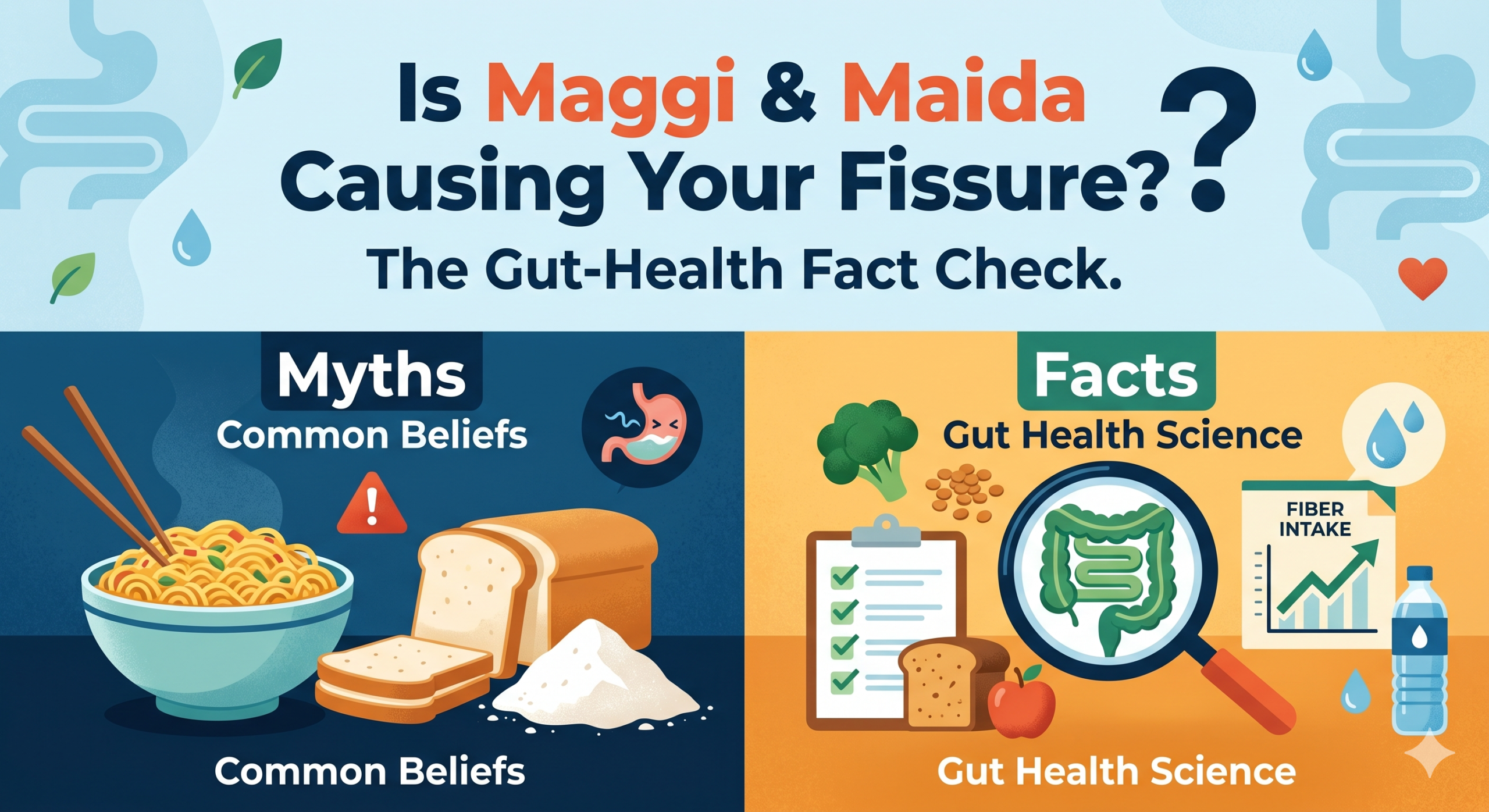
If you’ve ever experienced the sharp, glass-like pain of an anal fissure, you know the desperation of wanting to find the culprit. In many households, the finger is immediately pointed at the kitchen pantry—specifically at that quick packet of Maggi or anything made with Maida (refined flour).
But is it fair to blame your favorite comfort food for such an uncomfortable condition? Let’s dive into the gut-health facts and look at the science behind how your diet impacts your digestive tract.
Understanding the Link: What is an Anal Fissure?
Before we blame the noodles, we need to understand the mechanics. An anal fissure is a small tear in the thin, moist tissue (mucosa) that lines the anus. This usually happens when you pass hard or large stools.
The primary driver of fissures isn’t a specific brand of food, but rather constipation and straining. This is where Maida and ultra-processed foods like instant noodles enter the conversation.
The “Maida” Problem: Why Refined Flour is a Gut Foe
Maida is essentially wheat flour that has been stripped of its bran and germ. While this makes for fluffy bhaturas and soft bread, it removes the most critical component for your gut: Fiber.
1. Lack of Bulk
Fiber adds bulk to your stool and pulls in water to keep it soft. Since Maida is purely endosperm (starch), it moves slowly through the digestive system. This “sluggish” motility leads to dry, hard stools that are difficult to pass.
2. The “Glue” Effect
In the world of gut health, Maida is often jokingly referred to as “gut glue.” Without fiber to sweep it through, refined flour can contribute to a backup in the colon, forcing you to strain during bowel movements—the number one cause of fissure tears.
Is Maggi Specifically to Blame?
Maggi, like most instant noodles, is primarily made of refined wheat flour (Maida). However, the “fissure risk” isn’t just about the flour; it’s about the nutritional vacuum the meal creates.
-
Low Fiber: A standard serving of instant noodles provides negligible dietary fiber.
-
High Sodium: The tastemaker is loaded with salt. Excessive sodium can lead to dehydration, as the body draws water out of the colon to balance blood salt levels. Dehydration equals harder stools.
-
Preservatives and Fats: The palm oil and stabilizers used to give noodles their shelf life can disrupt the gut microbiome in sensitive individuals, potentially leading to inflammation or irregular bowel habits.
The Verdict: Maggi doesn’t “cause” a fissure directly, but a diet high in Maggi and low in vegetables creates the perfect environment for one to develop.
The EEAT Fact Check: What Science Says
From a clinical perspective, managing a fissure requires a high-fiber intake (roughly 25-30 grams per day). If your diet consists of 70% Maida-based products, you are likely hitting less than half of that target.
| Food Item | Fiber Content | Impact on Stool |
| Maida (Refined Flour) | Very Low | Hard, small, difficult to pass |
| Whole Wheat / Oats | High | Soft, bulky, easy to pass |
| Instant Noodles | Low | Slow transit time, dehydration risk |
How to Enjoy Your Noodles Without the Pain
You don’t necessarily have to banish Maggi forever, but you do need to “fix” it for the sake of your gut health. If you are prone to fissures or constipation, follow these rules:
-
The 50/50 Rule: For every cup of noodles, add a cup of fibrous vegetables (carrots, beans, peas, or capsicum).
-
Hydrate Like a Pro: Drink an extra glass of water for every salty, processed meal you consume.
-
Switch the Base: Opt for whole-grain or millet-based noodles when possible.
-
Listen to Your Body: If you are currently healing from a fissure, avoid Maida entirely until the tissue has fully repaired.
Summary: A Balanced View
Is Maggi the “villain”? Not on its own. The real culprit is a lack of fiber and hydration. If your diet is dominated by Maida, you are putting a significant strain on your digestive system.
To keep your gut happy and your bathroom trips pain-free, treat refined flour as an occasional guest, not a permanent resident in your daily meals. Your colon will thank you.