



In traditional Indian households, whenever someone whispers about suffering from piles (hemorrhoids), an elder will almost inevitably suggest eating Jimikand. Known as Suran in Hindi or Suvarna Gedde in Kannada, Elephant Foot Yam has a legendary, almost mythical reputation for treating anorectal disorders.
But in an era of wellness fads and unverified claims, we have to ask: Is Jimikand an actual medical “cure,” or just an old wives’ tale? Let’s separate the nutritional science from the myths and learn exactly how to prepare this tuber for maximum gut health.
The Science: Why Jimikand Works for Piles
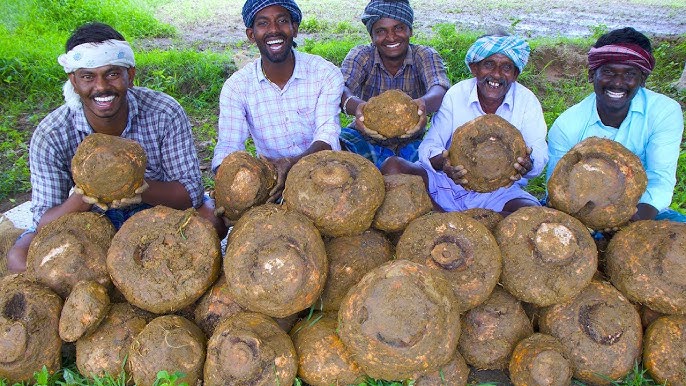
In Ayurveda, Jimikand is explicitly classified as Arshoghna (the destroyer of piles). Modern nutritional science actually backs up many of these ancient claims, though it categorizes the benefits differently:
1. The Fiber Powerhouse
The primary cause of hemorrhoid flare-ups is straining due to constipation. Jimikand is incredibly dense in both soluble and insoluble dietary fiber. This combination acts as a broom for your intestines, adding soft bulk to your stool and promoting smooth, strain-free bowel movements.
2. Rich in Prebiotics
Elephant Foot Yam contains complex carbohydrates that resist early digestion, making it down to your colon to feed the “good” bacteria. A healthy gut microbiome reduces systemic inflammation, which directly helps calm inflamed hemorrhoidal veins.
3. Natural Astringent Properties
Jimikand contains mild astringent properties that help in shrinking inflamed tissues and reducing the engorgement of the blood vessels around the anal region.
The Danger of the “Itch”: Why Preparation Matters
Before you rush to the market, there is a catch. Raw or improperly cooked Jimikand contains high levels of calcium oxalate crystals. These microscopic, needle-like structures can cause severe itching, burning, and swelling in your mouth and throat.
To make Jimikand safe and effective for your gut, these crystals must be neutralized using an acidic medium.
The Anti-Piles Recipe: How to Cook Jimikand
If you deep-fry Jimikand into crispy chips or drench it in fiery red chili powder, you will completely destroy its medicinal value and actively aggravate your piles. Here is the therapeutically correct, gut-friendly way to prepare it.
Step 1: The Essential Acid Soak
-
Wash, peel, and cube the yam (wear food-prep gloves if your skin is sensitive to the raw sap).
-
Submerge the cubes in a bowl of sour buttermilk or tamarind water for at least 30 to 45 minutes. The natural acids will break down the irritating calcium oxalate crystals.
Step 2: The Digestive Boil
-
Rinse the soaked cubes thoroughly.
-
Pressure cook them with a pinch of turmeric and rock salt (Sendha Namak) until they are fork-tender.
Step 3: The Healing Mash (Suran Bharta)
To maximize its benefits for piles, avoid heavy curries. Instead, make a simple mash:
-
Mash the boiled Jimikand.
-
In a pan, heat one teaspoon of pure A2 Ghee. Ghee is a natural laxative (mild) and helps lubricate the digestive tract.
-
Temper with a pinch of Ajwain (Carom seeds) and Jeera (Cumin). These spices prevent bloating.
-
Avoid red chili entirely. If you need spice, use a tiny amount of black pepper.
-
Mix in the mashed yam, cook for two minutes, and finish with fresh coriander.
The Fact Check: Is it a Magic “Cure”?
It is crucial to approach natural remedies with a healthy dose of skepticism, especially when dealing with a painful condition.
The Reality: Jimikand is an exceptional dietary management tool, not a surgical alternative.
If you have Grade 1 or Grade 2 piles, incorporating properly cooked Jimikand into your diet 2–3 times a week can drastically reduce flare-ups, bleeding, and pain by normalizing your bowel movements.
However, beware of “miracle workers” or online quacks selling secret yam powders promising an overnight cure. If you are dealing with Grade 3 or Grade 4 prolapsed piles, no amount of yam will reverse the anatomical damage. In such cases, Jimikand is a great post-operative food to prevent recurrence, but you must consult a colorectal specialist for primary treatment.
The Bottom Line: Treat Suvarna Gedde as the ultimate superfood for your colon. Cook it with care, pair it with plenty of hydration, and let its high-fiber magic do the heavy lifting for your digestive health.

