


If you commute in Bangalore, you already know the drill: dodging sudden craters on the Outer Ring Road, navigating endless stretches of broken tarmac, and sitting in gridlock at Silk Board. It’s hard enough on your back and patience, but if you are dealing with piles (hemorrhoids), a daily two-wheeler commute can quickly turn from a chore into absolute agony.
While a sedentary lifestyle and poor diet are often the root causes of piles, the mechanical stress of riding a bike on uneven roads is a major trigger that can cause existing hemorrhoids to flare up, swell, or bleed.
Here is the gut-health and ergonomic fact check on why your commute is hurting you, and how to protect yourself.
The Physics of the Pothole: Why Riding Aggravates Piles
Piles are essentially swollen, inflamed veins in your lower rectum and anus. To understand why a two-wheeler commute is their worst enemy, we have to look at the mechanics of riding:
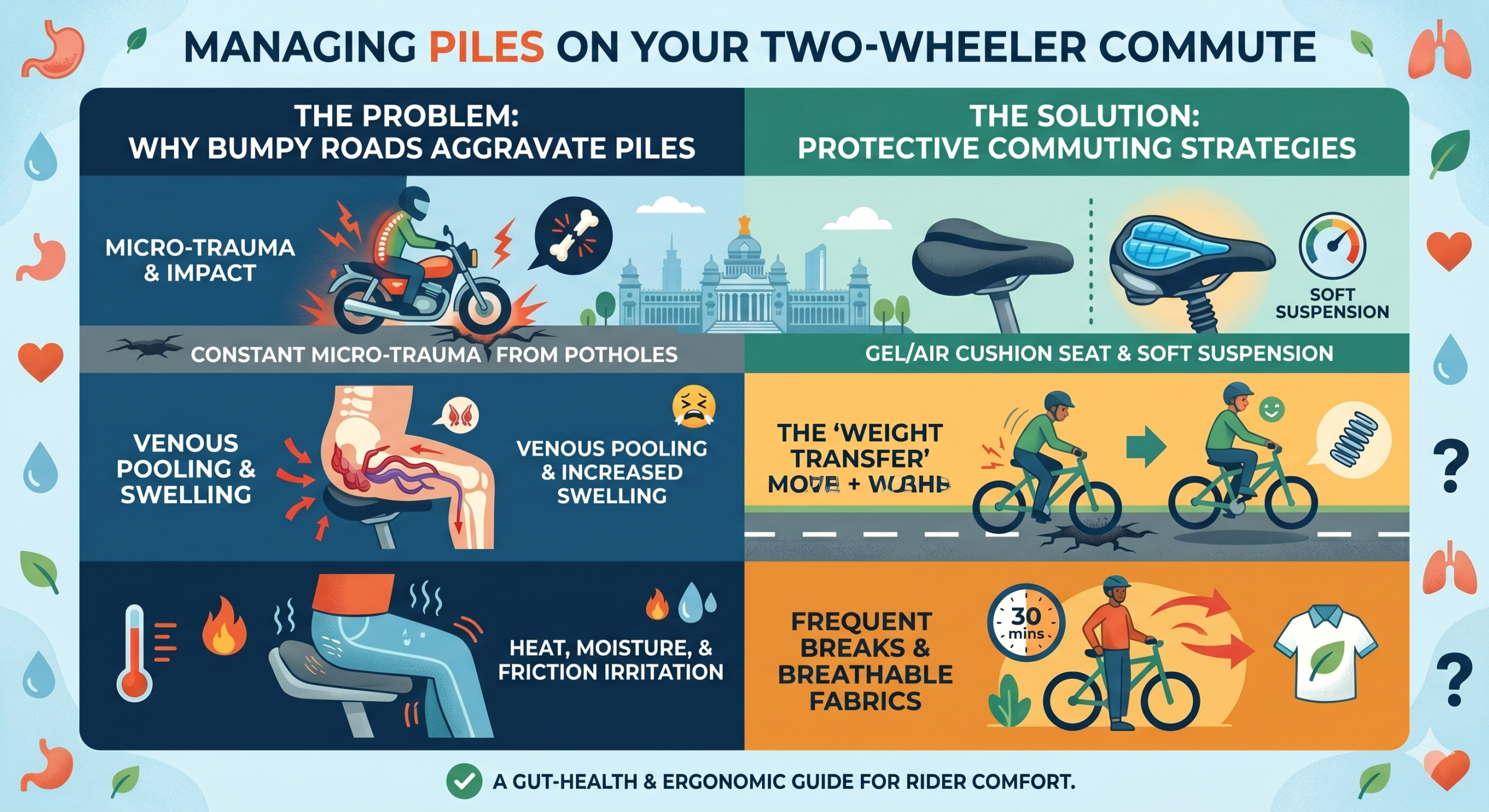
1. Constant Micro-Trauma and Impact
Every time your bike hits a pothole or a speed breaker, the shock travels directly upward through the seat into your pelvic floor. This constant, rhythmic jarring increases the pressure on the already engorged veins in your rectal area, leading to micro-tears and increased inflammation.
2. Venous Pooling from Prolonged Sitting
Sitting on a narrow motorcycle or scooter seat for an hour or more in stagnant traffic causes blood to pool in your pelvic region. The lack of lower-body movement slows down blood circulation, causing the hemorrhoidal veins to swell further.
3. Heat and Friction
The combination of Bangalore’s pre-monsoon heat, the engine’s thermal output, and the friction of synthetic seat covers creates a hot, sweaty environment. This moisture and friction irritate the sensitive perianal skin, worsening the itching and burning associated with piles.
Actionable Hacks: How to Commute Without the Cringe
You might not be able to fix the city’s infrastructure or skip the commute entirely, but you can change how you ride. If you are managing piles, implement these strategies immediately:
Upgrade Your Hardware
-
Invest in a Gel or Air Seat Cushion: Do not rely on the stock foam seat of your Activa, Jupiter, or Enfield. Strap on a high-quality, pressure-relieving gel pad or an air-filled commuter cushion. This absorbs the kinetic shock before it reaches your body.
-
Check Your Shocks: Ensure your two-wheeler’s rear suspension is set to a softer setting. A stiff suspension transfers every pebble’s impact directly to your spine and pelvis.
Adjust Your Riding Technique
-
The “Weight Transfer” Move: When you see a pothole or speed breaker approaching, do not sit passively. Put your weight on your footpegs or floorboard and lift your bottom slightly off the seat. Let your legs act as natural shock absorbers.
-
Breathe Through the Bumps: A common reflex when hitting a bad patch of road is to tense up and hold your breath. This inadvertently mimics straining on the toilet, which spikes intra-abdominal pressure. Keep your breathing steady and relaxed.
Manage the Environment
-
Wear Breathable Fabrics: Swap tight jeans or synthetic trousers for loose-fitting, breathable cotton clothing to reduce heat and friction.
-
Take the 30-Minute Stand: If you are stuck in dead-stop traffic for more than 30 minutes, safely pull over, get off the bike, and stand or walk for two minutes to restore blood flow to your pelvic region.
When to Stop Riding and Seek Help
Riding hacks and dietary changes (like increasing your fiber and water intake to prevent hard stools) are excellent for management, but they are not a cure for advanced piles.
If you experience persistent bleeding, severe sharp pain that lingers hours after your commute, or a prolapse that does not retract, it is time to stop masking the symptoms. Continual trauma from riding can turn a manageable Grade 1 or 2 internal hemorrhoid into a painful, thrombosed external issue.
The Bottom Line: Your daily commute shouldn’t be a pain in the… well, you know. By modifying your seat, adjusting your posture, and seeking specialized colorectal care when things get tough, you can make peace with Bangalore’s roads and keep your gut health on track.