



Piles vs Fissure: How to Tell the Symptoms Apart
Experiencing discomfort in the lower rectal area can be deeply distressing, especially when trying to understand a diagnosis of piles vs fissure development based on your physical symptoms. Many individuals mistakenly assume that any form of anal pain, swelling or bleeding automatically points to hemorrhoids. However, while these two common anorectal conditions share similar triggers such as chronic constipation and excessive straining on the toilet they are structurally completely different issues.
Understanding the unique characteristics of piles vs fissure symptoms is the key to identifying the source of your discomfort. Recognizing these differences allows you to choose appropriate, targeted home remedies or know precisely when to consult a medical professional for an accurate clinical assessment.
Is Piles and Fissure the Same?
The simple answer is no. While they affect the same delicate area of the body, they represent entirely distinct structural problems within the anal canal:
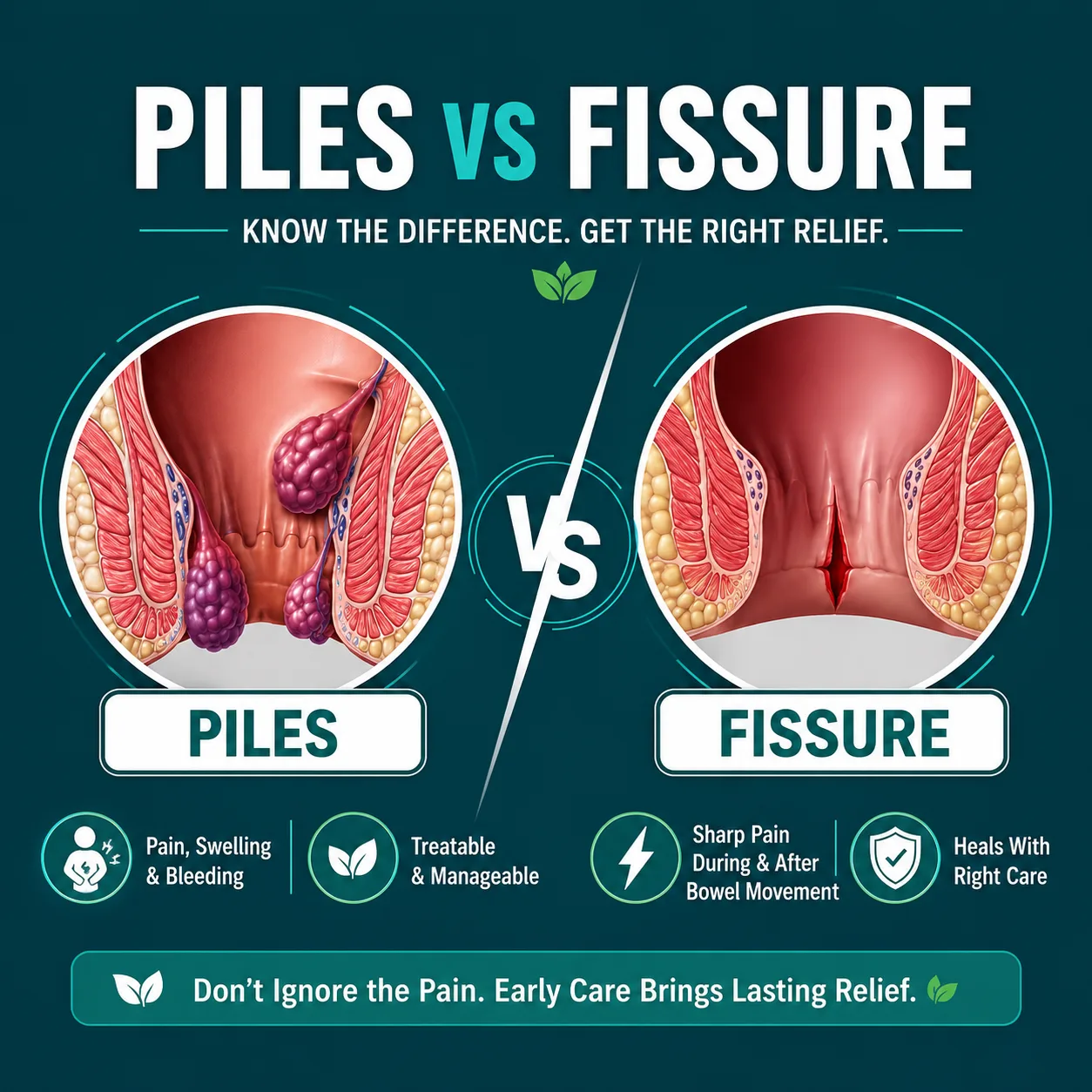
- Piles (Hemorrhoids): These are swollen, inflamed and dilated veins located inside or around the lower rectum and anus. They behave similarly to varicose veins and can protrude (prolapse) externally during a bowel movement.
- Anal Fissure: This is a physical tear, cut or crack in the thin, moist mucosal lining of the anal opening. It is an open wound rather than a vascular swelling.
Piles vs Fissure Symptoms: Key Differences
To help you distinguish between them, look closely at the timing and specific nature of your painful bowel movements.
Analyzing the Pain
- Fissure Pain: If you feel a sharp, stabbing, glass-like sting the exact moment stool passes, followed by a severe, throbbing ache that lingers for hours, you are likely experiencing typical anal fissure symptoms. This persistent pain occurs because the exposed raw cut causes the internal anal sphincter muscle to spasm violently.
- Piles Pain: Internal piles are usually completely painless because there are very few pain-sensing nerves deep inside the rectum. They typically only cause a dull, heavy ache or a feeling of fullness if they prolapse. However, if a blood clot forms inside an external hemorrhoid (a thrombosed pile), it can cause a sudden, severe and constant swelling pain.
Assessing Swelling and Bleeding
The nature of the tissue changes and blood loss can also highlight the difference between piles and fissure conditions:
- Lumps and Prolapse: Piles frequently present as soft, distinct, grape-like lumps around the anal opening that may slide back inside after you finish passing stool. A fissure does not cause large, soft lumps, though a long-standing, chronic fissure may develop a small, firm skin tag at the edge of the tear.
- Bleeding Patterns: Both issues can cause bright red blood to appear. With a fissure, the blood is typically a small amount seen on the toilet tissue or as a distinct streak on the side of a hard stool. With piles, the bleeding can be more pronounced, sometimes dripping directly into the toilet bowl after elimination.
Can You Have Both Piles and Fissures?
Yes, it is entirely possible to suffer from both conditions at the same time. Because both issues stem from identical root causes such as passing hard, dry stools, prolonged straining or chronic diarrhea the physical trauma that tears the anal lining can simultaneously cause the local veins to swell and become inflamed. When both conditions occur together, it can worsen your symptoms, making professional medical guidance highly beneficial for comprehensive healing.
Direct Comparison of Piles vs Fissure Tendencies
| Symptom / Feature | Hemorrhoids (Piles) Tendencies | Anal Fissure Tendencies |
| Primary Structural Issue | Swollen, inflamed rectal veins | A physical tear or cut in the skin |
| Pain Characteristics | Dull ache, pressure, or painless bleeding (unless thrombosed) | Sharp, stabbing pain during stool followed by hours of throbbing |
| Physical Appearance | Soft, compressible lumps that can protrude externally | A small, linear crack or a firm, localized skin tag |
| Bleeding Behavior | Bright red blood that may splash or drip into the bowl | Bright red blood visible on tissue or streaked on stool |
Piles or Fissure: Which is More Dangerous?
Neither simple piles nor acute anal fissures are inherently life-threatening or dangerous. They are localized, highly treatable issues that do not lead to serious conditions like colorectal cancer. However, if left completely unmanaged, chronic fissures can cause permanent scarring and narrow the anal canal, while severe, long-standing piles can lead to chronic anemia due to ongoing blood loss or cause tissue strangulation. The real danger lies in self-diagnosing, as more significant gastrointestinal issues can mimic these symptoms.
Piles and Fissures Treatment: Basic Overview
While a doctor will provide a tailored plan, initial conservative care for a mild case of piles vs fissure discomfort focuses on keeping your stools consistently soft to allow the area to heal:
- High-Fiber Diet & Hydration: Consuming plenty of soluble fiber and drinking 8–10 glasses of water daily helps keep stool bulky and soft, which minimizes friction against a healing tear or swollen veins.
- Warm Sitz Baths: Soaking in shallow, warm water for 15 minutes relaxes the internal anal sphincter, which immediately relieves fissure spasms and reduces hemorrhoidal swelling.
- Proper Bathroom Hygiene: Avoid straining or sitting on the toilet for more than 5 minutes. Use a water bidet or alcohol-free wet wipes instead of rough, dry toilet paper to keep the area clean without causing further irritation.
When to Seek Professional Medical Help
You should move past at-home management and seek prompt clinical attention from a qualified proctologist or gastroenterologist if you experience any of the following warning signs:
- Your symptoms do not improve after two weeks of consistent dietary changes and home care.
- You experience significant, persistent rectal bleeding, pass dark maroon or black stools or notice blood clots.
- The pain becomes severe enough to disrupt your daily routine, sleep or ability to sit comfortably.
A professional evaluation ensures an accurate diagnosis and gives you access to specialized prescription ointments, stool softeners or minor medical procedures if needed.
Distinguishing between piles vs fissure symptoms is a crucial first step toward finding relief. If your symptoms involve a sharp, paper-cut-like sting followed by long-lasting spasms, you are likely dealing with an anal fissure. If you notice painless bright red bleeding or soft, protruding lumps, hemorrhoids are the more probable cause. By focusing on gentle bowel habits, maintaining excellent hydration and seeking timely medical advice when necessary, you can support your body’s natural healing process and maintain long-term digestive comfort.