


Best Safe Exercises for People With Piles
Choosing the best exercises for piles management is an incredibly effective, drug-free way to reduce hemorrhoidal swelling, stimulate sluggish bowel motility and protect your lower rectal tissues from unnecessary friction. Many physical fitness enthusiasts mistakenly assume that a piles flare-up means they must completely abandon their workout routines. While certain high-intensity or heavy-lifting regimes can worsen the condition, staying completely sedentary can actually prolong your discomfort.
When you sit around or remain inactive, your digestion slows down, which can lead to hard stool buildup and increased pressure on your pelvic veins. Shifting your focus to specific movements can help keep you physically active, improve pelvic blood flow, and support your body’s natural healing process.
Why Exercise Matters for Hemorrhoids
Regular, intentional physical movement acts as a natural pump for your circulatory and digestive systems. Engaging in carefully selected physical movements provides distinct physiological advantages for your body:
- Boosts Gastrointestinal Motility: Physical activity naturally stimulates the smooth muscle contractions of your large intestine (peristalsis). This speeds up the transit time of waste, which is essential for managing the underlying constipation that causes hemorrhoids.
- Improves Venous Return: Moving your legs helps pump pooled blood up from your lower extremities and pelvic floor back toward your heart. This natural circulation reduces the resting pressure inside swollen, engorged hemorrhoidal veins.
- Regulates Inflammatory Markers: Regular, moderate movement lowers systemic inflammation across your tissues, which can help soothe raw, irritated mucosal membranes.
5 Safe Exercises to Help Treat and Prevent Hemorrhoids
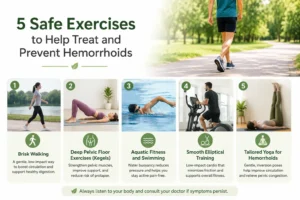
If you are currently managing an active flare-up, incorporate these low impact workouts for piles and supportive routines into your weekly schedule to stay active safely:
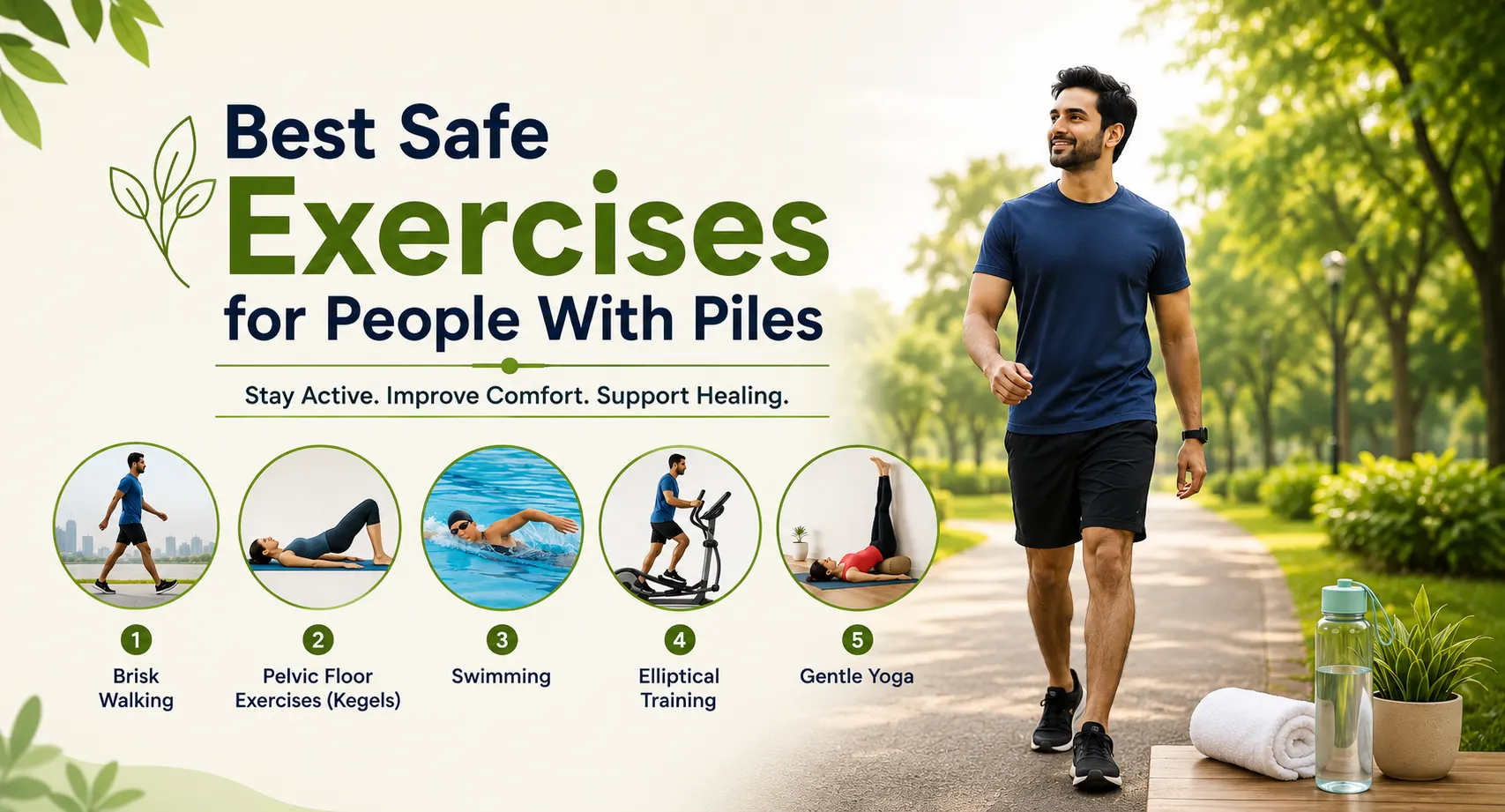
1. Brisk Walking
Walking is one of the safest and most effective exercises you can do. It provides a gentle, rhythmic workout that stimulates healthy digestion without placing sudden vertical stress or heavy friction on your sensitive rectal tissues. Aim for a steady 20 to 30-minute daily walk in loose, breathable clothing.
2. Deep Pelvic Floor Exercises (Kegels)
Targeted pelvic floor exercises help strengthen the supportive muscular sling around your lower bladder and anus. By contracting and releasing these muscles, you can improve local blood flow, tone the surrounding tissues, and reduce the risk of internal piles sliding downward (prolapsing).
3. Aquatic Fitness and Swimming
Swimming or water aerobics allows you to exercise in a near-weightless environment. Water buoyancy removes gravity-induced pressure from your lower abdomen and rectal area, allowing you to build cardiovascular fitness without aggravating inflamed tissues.
4. Smooth Elliptical Training
The smooth, continuous motion of an elliptical trainer provides a great cardiovascular workout without the jarring, high-impact foot strikes of outdoor running. This steady movement minimizes localized skin friction around the anal canal.
5. Tailored Yoga for Hemorrhoids
Gentle, inversion-focused hatha yoga postures are excellent for relieving pelvic congestion. Postures like Viparita Karani (Legs-Up-The-Wall Pose) or a supported Glute Bridge elevate your hips above your heart, using gravity to naturally drain pooled blood away from swollen rectal veins.
What Exercises Should I Avoid If I Have Piles?
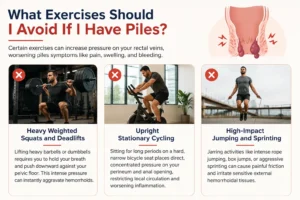
While staying active is highly beneficial, certain fitness movements generate intense internal abdominal pressure (Valsalva maneuver) that can push blood forcefully into your lower rectal vessels, causing them to swell or bleed.
- Heavy Weighted Squats and Deadlifts: Lifting heavy barbells or dumbbells requires you to hold your breath and push downward against your pelvic floor. This intense pressure can instantly aggravate hemorrhoids.
- Upright Stationary Cycling: Sitting for long periods on a hard, narrow bicycle seat places direct, concentrated pressure on your perineum and anal opening, restricting local circulation and worsening inflammation.
- High-Impact Jumping and Sprinting: Jarring activities like intense rope jumping, box jumps, or aggressive sprinting can cause painful friction and irritate sensitive external hemorrhoidal tissues.
What to Keep in Mind During Workouts
To keep your fitness routine safe and comfortable during a piles flare-up, keep these practical tips in mind:
1.Dress in Loose Fabrics: Before You Start.
Choose loose-fitting, 100% breathable cotton workout gear. Avoid tight compression shorts or synthetic fabrics that trap sweat and heat, which can cause painful skin friction.
2.Maintain Proper Breathing: Throughout Your Workout.
Never hold your breath while exerting yourself. Focus on exhaling smoothly during the hardest part of any movement to prevent sudden spikes in internal abdominal pressure.
3.Stay Consistently Hydrated: Every 15 Minutes.
Drink small, steady sips of room-temperature water during your session to keep your digestive tract well-hydrated and ensure your bowel movements remain soft.
4.Cleanse and Dry the Area: Immediately After.
Shower promptly after exercising to remove dried sweat and bacteria from the perianal area, then gently pat the skin completely dry with a soft towel.
When to See a Clinician
While gentle movement can support your recovery, you should pause your exercise routine and consult a qualified healthcare provider or proctologist if you experience any of the following warning signs:
- You notice bright red blood dripping or splashing into the toilet bowl during or immediately after a workout.
- An external hemorrhoid becomes sudden, intensely painful, hard, and turns a dark purple or blue color (indicating a thrombosed pile).
- Your local symptoms do not improve after two weeks of consistent low-impact exercise and dietary adjustments.
Incorporating the best exercises for piles into your weekly routine is a fantastic, natural way to support your digestion and maintain your fitness without aggravating sensitive tissues. By choosing low-impact options like brisk walking, swimming, and gentle yoga for hemorrhoids, you can boost your circulation and improve bowel motility safely. Avoid heavy lifting and high-impact activities that increase pelvic strain, wear breathable clothing, and stay well-hydrated. Listening to your body and staying active with these safe movements will help you find lasting comfort and support a smooth recovery.