



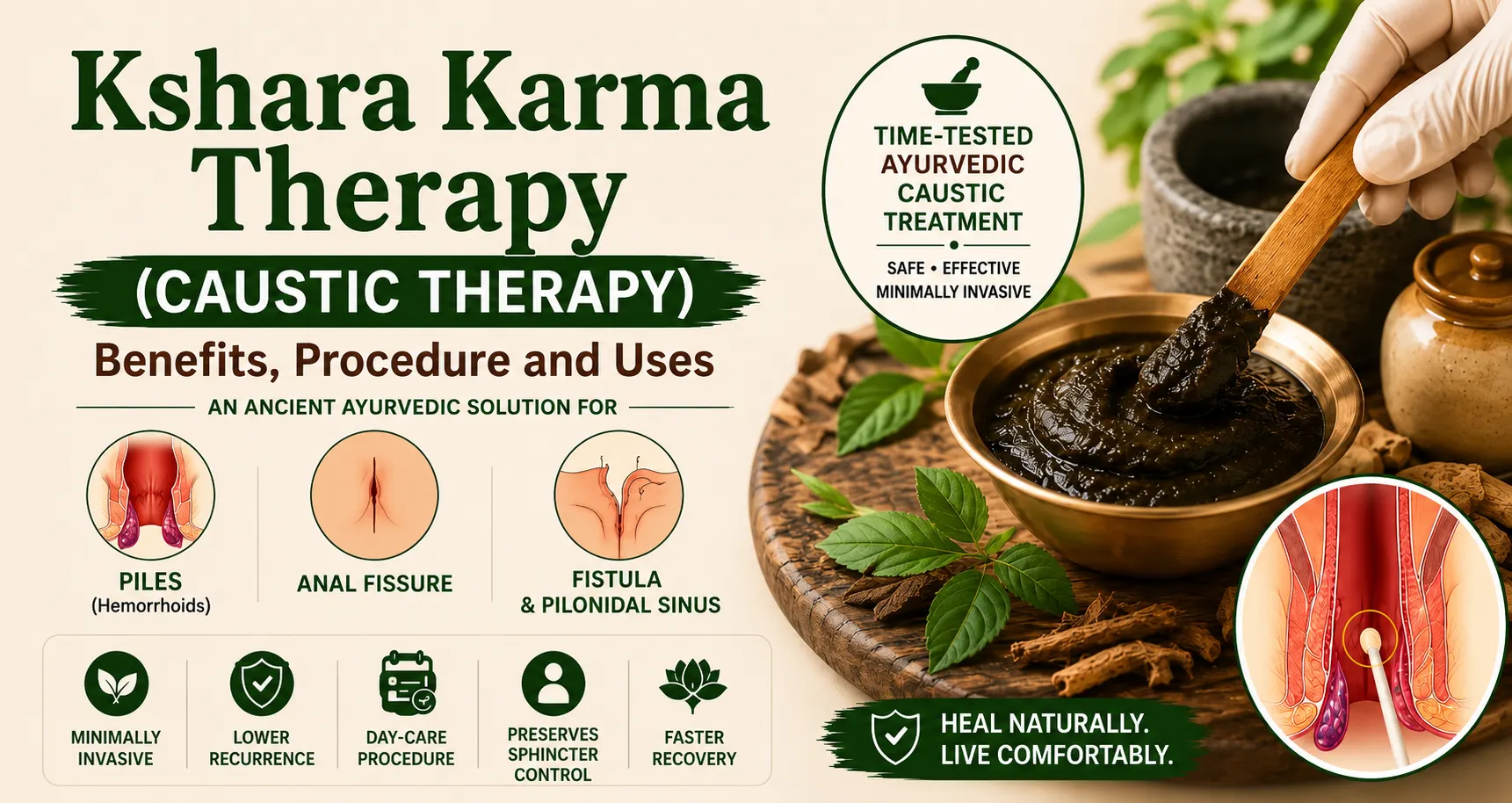
Kshara Karma Therapy (Caustic Therapy): Benefits, Procedure and Uses
Opting for specialized Kshara Karma Therapy provides an ancient, minimally invasive surgical alternative for individuals seeking long-term relief from chronic anorectal disorders without undergoing conventional hospital surgery. Classified under Shalya Tantra (Ayurvedic surgery), this traditional approach is a premier Ayurvedic caustic therapy utilized to treat conditions like internal hemorrhoids, anal fissures and complicated pilonidal sinuses. The term Kshara refers to an alkaline paste derived from the ashes of medicinal plants, such as Apamarga (Achyranthes aspera).
When applied directly to abnormal tissues by a trained professional, it chemically cauterizes the targeted area, causing the swollen masses to naturally shrink, detach and shed. This safe, time-tested approach has become a trusted choice for modern hemorrhoids treatment Ayurveda options across the globe.
The Classification of Parasurgical Procedures in Ayurveda
In classical Ayurvedic texts, Acharya Sushruta designated certain techniques as Anushastra Karma or parasurgical procedures in Ayurveda. These interventions are highly valued because they bridge the gap between simple medication and invasive scalpel-based surgery.
The two most prominent therapies within this medical family include:
- Pratisaraniya Kshara (Local Application): A precise method where the alkaline medicinal paste is applied directly onto internal or external tissue masses to chemically dissolve them.
- Kshara Sutra Treatment (Medicated Thread): A technique where a specialized linen thread, coated repeatedly with plant latex and Kshara, is physically tied across an anal fistula or pile mass. This thread performs simultaneous cutting and healing of deep tracts over several weeks, providing a reliable option for non-surgical fistula treatment.
Step-by-Step Guide to the Clinical Procedure
Understanding what happens during a clinical session can help ease anxiety before your appointment. The complete therapy process follows a structured sequence:
1.Pre-Operative Preparation:1-2 Hours Before.
The patient’s bowel is gently cleared using a mild enema or local suppository. The area is thoroughly sanitized under local or regional anesthesia to ensure maximum patient comfort.
2.Tissue Exposure:10 Minutes.
A specialized viewing instrument called a slit proctoscope is lubricated and inserted carefully into the anal canal to clearly reveal the internal hemorrhoidal masses or mucosal lesions.
3.Precise Caustic Application:2-3 Minutes.
The proctologist applies a precise layer of the alkaline Kshara paste directly onto the target tissue. The paste is left in place for up to 120 seconds, turning the tissue a dark brown color as it chemically seals off local blood vessels.
4.Chemical Neutralization:Immediate.
To prevent the alkaline paste from irritating surrounding healthy skin, the physician washes the entire area with a mild acid, typically fresh lemon juice (Nimbu Swarasa), bringing the local pH back to normal.
5.Protective Packing:5 Minutes.
The area is packed with a soothing, anti-inflammatory herbal formulation like Jatyadi Ghrita (medicated ghee) to protect the site and jumpstart natural healing.
Key Benefits of the Therapy
Choosing specialized Kshara Karma Therapy over standard surgery provides several unique clinical benefits:
- Minimal Tearing and Tissue Loss: The treatment targets only abnormal masses, leaving the surrounding healthy skin and muscle intact.
- Significantly Lower Recurrence Rates: Because the alkaline paste completely destroys the base of the swollen tissue, the chances of the condition returning are less than 1-2%, compared to higher rates with conventional surgery.
- No Hospital Stay Required: The procedure is generally performed as a quick day-care treatment, allowing you to return home the same day.
- Preserves Natural Sphincter Control: It avoids deep surgical cutting, ensuring that the muscles controlling bowel movements remain uninjured.
Recovery, Aftercare and Side Effects
A smooth recovery depends heavily on your daily aftercare routine. Following your session, the treated tissue will gradually dry up and naturally separate from the body during bowel movements within 5 to 7 days.
Managing Post-Procedure Discomfort
Patients often ask, is kshara karma painful? During the actual procedure, local anesthesia ensures you feel no sharp pain. However, as the numbness wears off over the next 24 to 48 hours, you may experience a mild to moderate burning or throbbing sensation in the rectal region. This discomfort can be easily managed by taking a warm sitz bath infused with a Triphala decoction three times a day, which relaxes the local muscles and keeps the area clean.
Potential Side Effects
While highly safe when performed by an experienced professional, minor Kshara karma side effects can occur. These may include a mild, water-like discharge for a few days, temporary local swelling or tiny streaks of blood during bowel movements as the treated mass detaches. If you notice severe, unremitting pain, a high fever or significant bleeding, contact your clinic immediately.
Clinical Efficacy, Costs and Financial Planning
Modern clinical trials consistently validate this traditional practice, showing that it successfully clears anorectal tissue masses with excellent patient safety markers.
When planning your care, the Kshara Karma for piles cost typically ranges from ₹15,000 to ₹45,000 ($200 to $550 USD), depending on the severity of the condition and the number of treatment sessions required. Many modern health insurance policies and corporate wellness plans now offer coverage for these government-recognized, day-care Ayurvedic procedures, helping to lower your out-of-pocket expenses.
Core Comparison: Caustic Therapy vs. Standard Surgery
| Feature / Metric | Kshara Karma Therapy | Conventional Surgery |
| Primary Method | Chemical cauterization via alkaline plant paste | Physical excision using a scalpel or laser |
| Sphincter Damage Risk | Incredibly low; preserves muscle wall integrity | Higher risk of muscle scarring or leakage |
| Average Recurrence Rate | Less than 2% in documented clinical studies | Around 5-10% depending on the surgical technique |
| Hospital Stay Length | Day-care procedure; patient walks out same day | Often requires 1 to 3 days of hospital recovery |
Undergoing Kshara Karma Therapy provides a highly effective, time-tested approach to treating painful anorectal conditions without the need for traditional surgery. By leveraging the natural power of plant-derived alkaline pastes, this specialized Ayurvedic caustic therapy removes painful tissue masses at their source while protecting healthy surrounding skin. Pair this treatment with a fiber-rich diet, consistent daily hydration and guidance from a certified professional to restore lasting health and comfort to your life.