


Comparing Piles Treatments: When to Use Home Remedies vs. Surgery
Navigating the wide variety of piles treatment options can feel overwhelming when you are dealing with local throbbing, swelling and bleeding during bowel movements. Whether you are experiencing mild discomfort for the first time or dealing with severe, prolapsed tissue that disrupts your daily routine, finding the right medical path is crucial for long-term comfort.
The choice between conservative non-surgical management and advanced clinical surgery comes down to the specific severity (grade) of your swollen hemorrhoidal veins. Understanding how your condition compares on the medical spectrum helps you take early action, choose effective therapies and prevent unnecessary pain or complications.
Understanding Piles and Why Early Treatment Matters
Hemorrhoids commonly referred to as piles are engorged, swollen clusters of blood vessels located in the mucosa of the lower rectum and anal canal. They act like small dynamic cushions, but when subjected to chronic abdominal pressure, they stretch, inflame and can slip out of place.
Ignoring early warning signs allows mild venous congestion to progress into chronic, structural tissue damage. Early intervention prevents internal hemorrhoids from prolapsing externally, reduces the risk of painful blood clots (thrombosis) and stops persistent rectal bleeding that could lead to anemia.
Understanding Piles: Types and Medical Grades
Medical professionals evaluate internal piles treatment options by categorizing the condition into four distinct clinical stages based on the extent of tissue prolapse:
| Clinical Grade | Structural Description | Typical Primary Symptoms | Recommended Treatment Focus |
| Grade 1 | Small internal inflammation; no external tissue prolapse | Painless bright red bleeding during bowel movements | Conservative dietary changes and home remedies |
| Grade 2 | Tissue prolapses during straining but retracts spontaneously | Bleeding, mild itching and local tissue fullness | Dietary fiber, sitz baths and outpatient procedures |
| Grade 3 | Tissue prolapses during straining; requires manual reduction | Frequent discomfort, mucus discharge and soiled skin | Outpatient procedures or laser surgery |
| Grade 4 | Permanently prolapsed tissue; cannot be manually pushed back | Constant pain, bleeding and high risk of strangulation | Advanced clinical surgery (laser or traditional) |
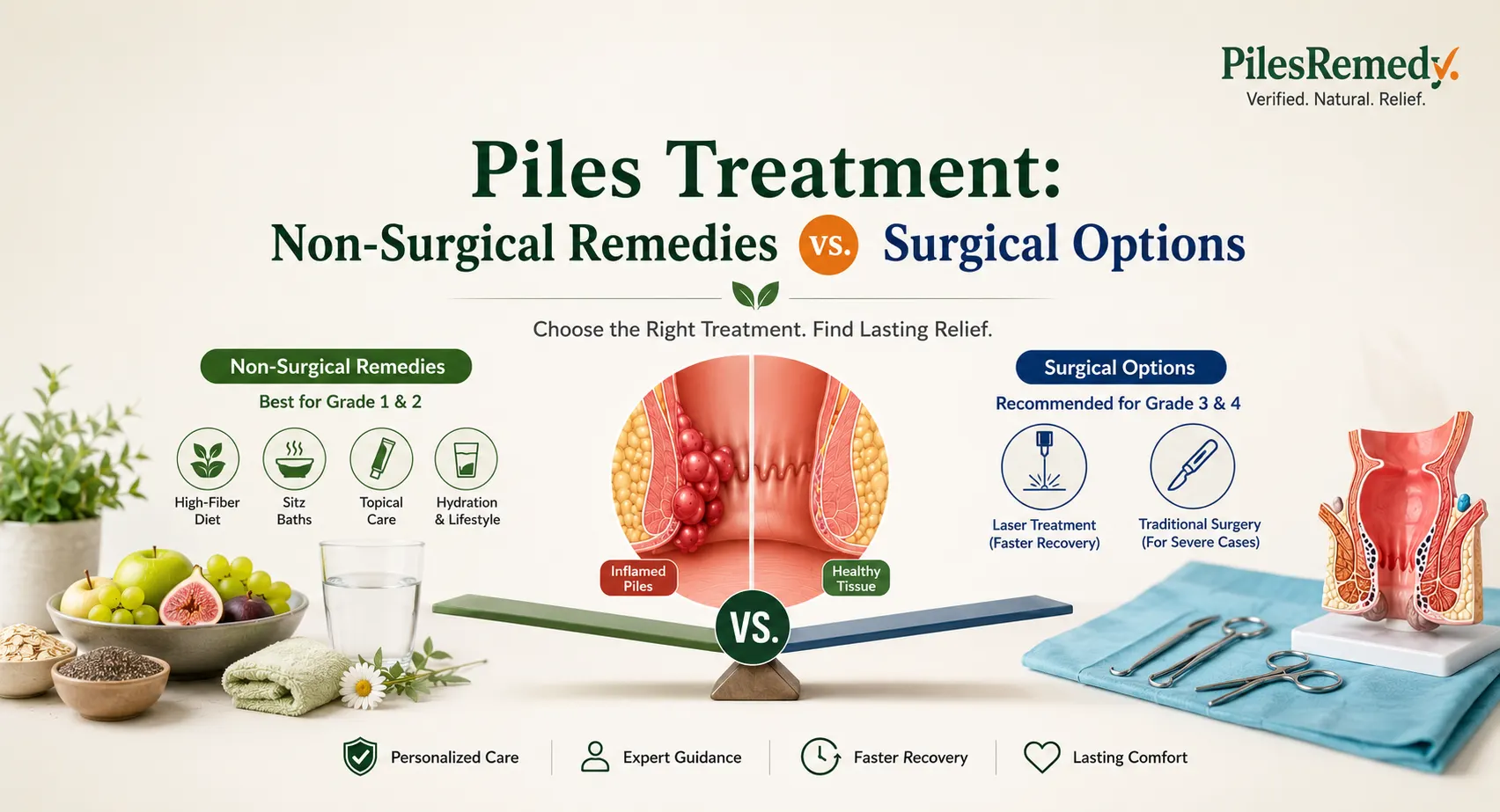
Non-Surgical Remedies (Grades 1 & 2)
For early-stage inflammation, non-surgical vs surgical piles treatment approaches lean heavily toward conservative daily habits that relieve pressure on your pelvic floor.
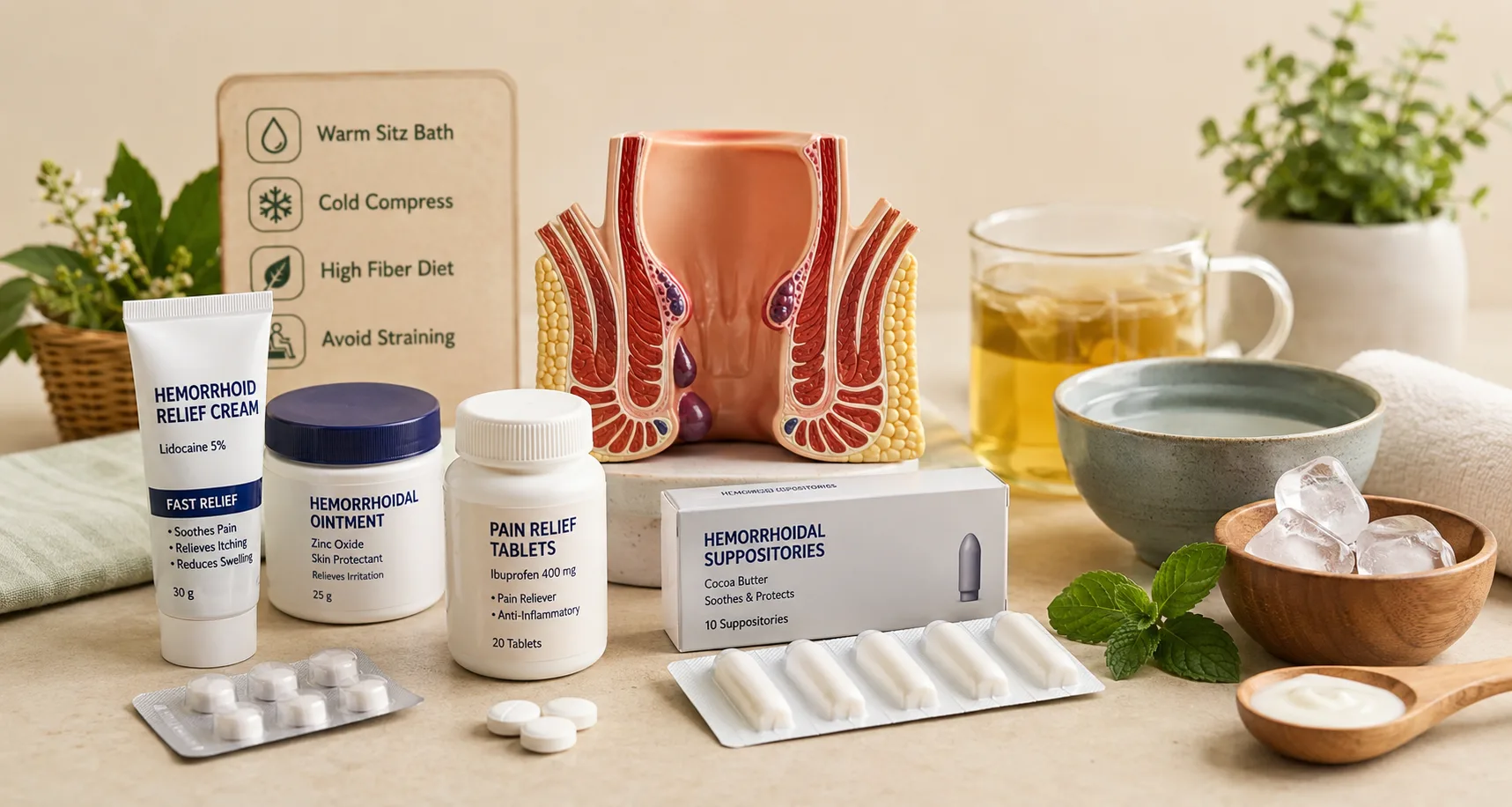
Effective Home Remedies for Hemorrhoids
- Targeted Fiber Enrichment: Build meals around soluble fiber sources like oats, soaked chia seeds and ripe fruits. This bulks up waste material so it passes smoothly without irritating fragile rectal walls.
- Warm Sitz Baths: Soak your lower pelvic region in a clean basin of warm water for 15 minutes, two to three times a day. This relaxes a tense anal sphincter muscle and improves local blood flow.
- Topical Protection: Use over-the-counter soothing ointments containing witch hazel or zinc oxide to protect raw skin and ease localized itching.
Essential Piles Treatment Food Strategy
A successful diet plan focuses on keeping your stools soft and well-hydrated. Drink at least 2.5 to 3 liters of room-temperature water daily to ensure soluble fiber can swell into a smooth, slippery gel. At the same time, cut out inflammatory triggers like ultra-processed foods, deep-fried snacks and heavy red chili spices that irritate the lower colon during elimination.
Minimally Invasive Non-Surgical Procedures
When lifestyle adjustments alone do not completely stop Grade 1 or Grade 2 bleeding, outpatient clinic procedures can reduce swollen tissue without traditional surgery:
- Rubber Band Ligation: A small rubber band is placed tightly around the base of an internal hemorrhoid, cutting off its blood supply. The starved tissue shrinks and falls off harmlessly within a week.
- Sclerotherapy: A chemical solution is injected directly into the hemorrhoid tissue, causing it to scar, shrink and seal off bleeding blood vessels.
Surgical Options for Grade 3 and 4 Hemorrhoids Treatment
When managing severe Grade 3 and 4 hemorrhoids treatment, conservative home care is often insufficient. Highly prolapsed, painful or strangulated tissues require direct surgical intervention.
Laser Treatment for Piles vs Traditional Surgery
Understanding laser treatment for piles vs traditional surgery helps you weigh modern medical techniques against classic open operations:
- Laser Hemorrhoidoplasty (LHP): A specialized laser fiber delivers targeted light energy directly into the center of the hemorrhoidal node. This vaporizes the blood supply from the inside out, causing the tissue to shrink back without open cuts or external stitches.
- Traditional Excisional Hemorrhoidectomy: The surgeon uses a scalpel or surgical scissors to cut away the prolapsed tissue mass entirely. While highly effective for severe Grade 4 cases, it creates open wounds in sensitive areas, leading to a longer, more painful recovery.
Traditional vs. Surgical Treatment: How to Choose What’s Best for You
Evaluating your piles surgery recovery time alongside your clinical needs can guide you toward the right medical decision:
1.Determine Your Severity Grade: Step 1: Clinical Assessment.
Consult a qualified proctologist to confirm whether your hemorrhoids are internal, external or prolapsed. This step ensures you avoid using home remedies on severe Grade 4 tissue that requires direct medical care.
2.Try 2 Weeks of Lifestyle Changes: Step 2: Conservative Trial.
If you have Grade 1 or Grade 2 piles, commit to high-fiber meals, proper hydration and warm sitz baths. If bleeding or pain continues after two weeks, move on to clinical options.
3.Compare Surgical Options: Step 3: Evaluate Modern Procedures.
If you require surgery, discuss laser hemorrhoidoplasty with your physician. Laser therapy typically allows you to return to normal activities within 3 to 5 days, compared to a 2 to 4 week recovery period for traditional open surgery.
4.Maintain Preventative Habits: Step 4: Post-Treatment Care.
Regardless of the procedure you choose, maintain a fiber-rich diet and drink plenty of water to prevent constipation and protect your long-term vascular health.
Considerations for Piles Treatment in Females
Female patients often face unique physical factors that require specialized anorectal care:
- Pregnancy and Pelvic Floor Pressure: Elevated progesterone levels relax blood vessel walls, while a growing uterus places direct pressure on the lower vena cava. This makes pregnant women particularly prone to acute hemorrhoidal flare-ups.
- Postpartum Recovery: The intense downward pushing during childbirth can cause internal tissue to prolapse or lead to painful external blood clots (thrombosis).
- Gentle Care Protocols: Conservative non-surgical vs surgical piles treatment options such as warm sitz baths, safe fiber supplements and topical lubricants are strongly prioritized during pregnancy and nursing to protect both mother and child.
Finding the most effective piles treatment options relies on matching your care strategy to the actual severity of your condition. Early-stage Grade 1 and Grade 2 hemorrhoids often resolve with simple home care, including warm sitz baths, high-fiber foods and proper hydration. However, advanced Grade 3 and Grade 4 conditions require clinical interventions, where modern options like laser therapy offer faster recovery times compared to traditional open surgery. Consult a qualified proctologist to evaluate your symptoms, choose the right treatment path and enjoy lasting comfort and peace of mind.
Medical Disclaimer: The information provided in this article is strictly for educational, historical and patient-awareness purposes and does not replace professional medical advice, diagnosis or treatment. Severe, strangulated or fourth-degree prolapsed hemorrhoids with continuous bleeding require evaluation by a qualified physician or proctologist. If you experience persistent heavy bleeding, severe unmanageable pain or a high fever, seek emergency medical care immediately.
 Written by S N
 Reviewed by Dr. Sumukhi Ravi - Ayurvedic surgeon and proctologist, BAMS, MS in Shalya Tantra (Ayurvedic surgery), KAUP 41363Dr. Sumukhi Ravi is an Ayurvedic surgeon who completed her MS in Shalya Tantra — the surgical branch of Ayurveda — and practises full-time in ano-rectal care at Jayanagar 9th Block. She works principally with Kshara Sutra and Kshara Karma, the para-surgical techniques described by Sushruta, and has published two first-author case reports on Ayurvedic wound healing.